

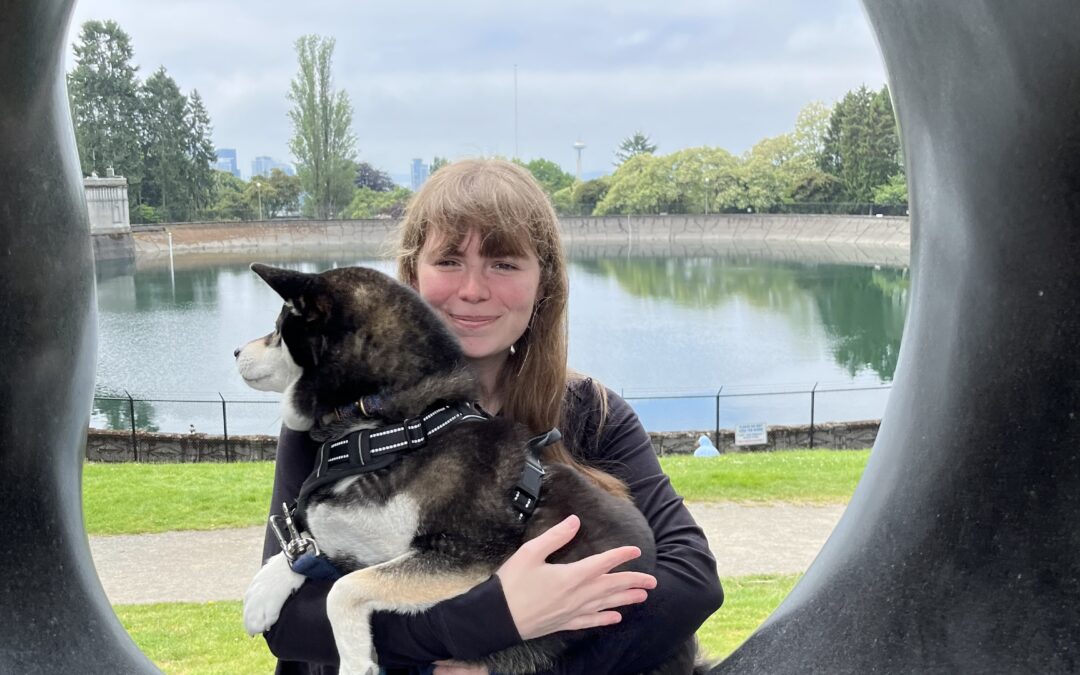
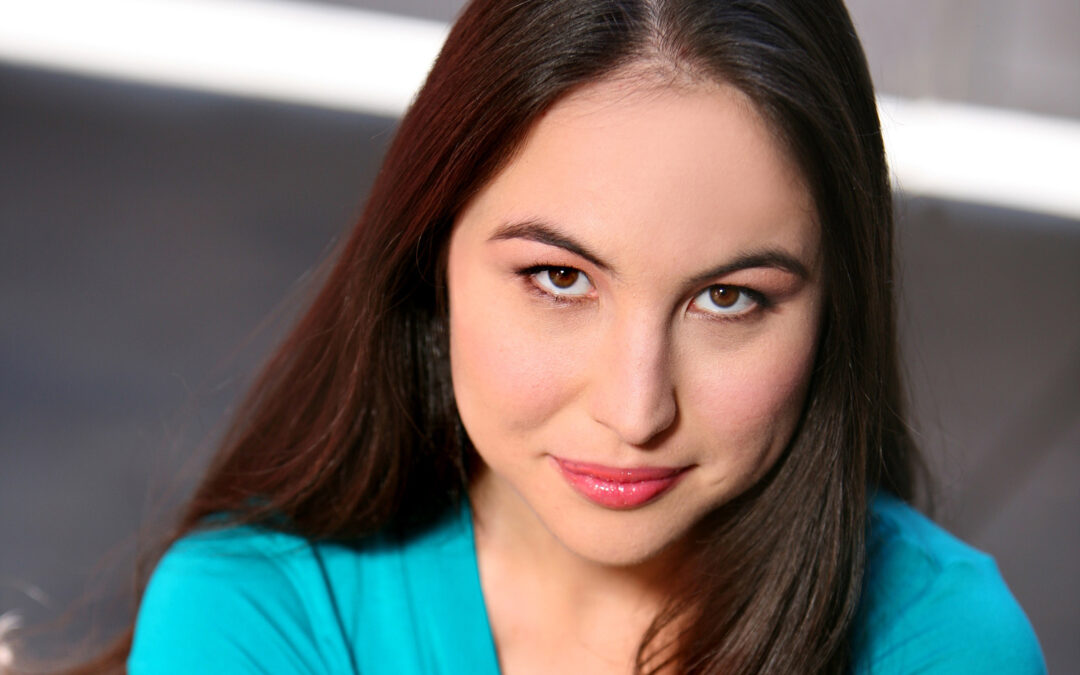
C.L. Clark (they/she) is a BFA award-winning editor and Ignyte award-winning author of several books, including The Unbroken (Magic of the Lost trilogy), Fate’s Bane (a novella), and Ambessa: Chosen of the Wolf (an Arcane novel). She graduated from Indiana University’s creative writing MFA and was a 2012 Lambda Literary Fellow. She’s been a personal trainer, an English teacher, and an editor, and is some combination thereof as she travels the world. When she’s not writing or working, she’s learning languages, reading about war and [post-]colonial history, or trying not to throw her kettlebells through the wall. Her work has appeared in various SFF venues, including Best American Science Fiction and Fantasy, Tor.com, Uncanny, and Beneath Ceaseless Skies.
I had the opportunity to interview C.L., which you can read below.
First of all, welcome back to Geeks OUT! For new readers, could you tell us a little about yourself?
I’m C. L., I write fantasy and science fiction of various lengths, and I’m trying to make myself into the closest approximation of Xena, Warrior Princess that I can. So far, I’ve done trail running, sword fighting, and archery. Next stop…horseback riding, I think? I’m based in London, which is a great launch point for all of that.
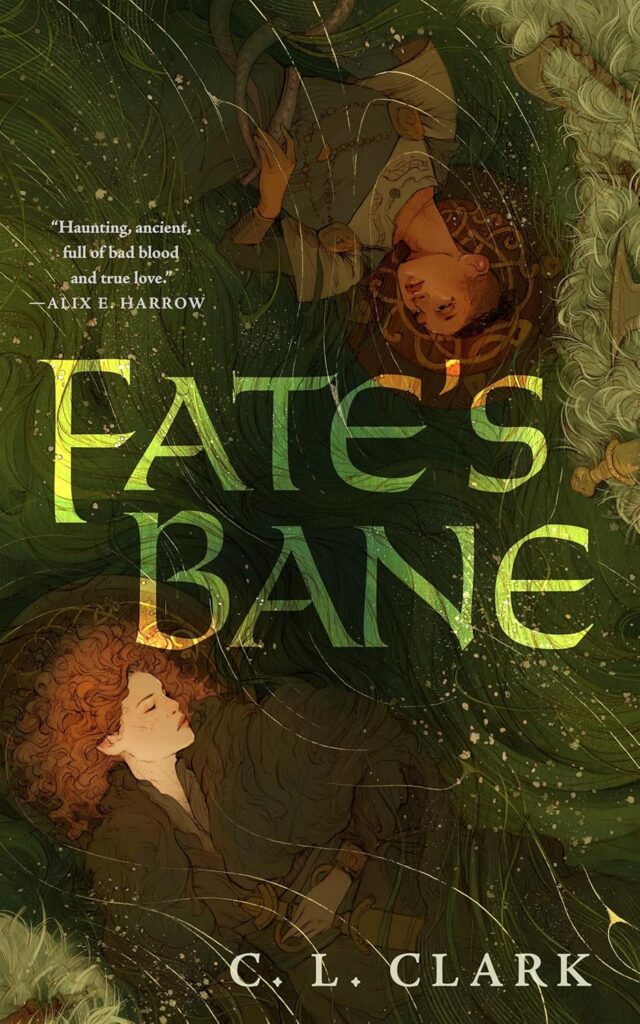
What can you tell us about your latest book, Fate’s Bane? What was the inspiration for the project?
Like most of my work, it centers around a pair of queer women, who find themselves in love against all odds, and standing against all odds beside each other, with the ability to curse the leatherwork they craft together. Agnir and Hadhnri come from opposite clans but Agnir was fostered by Hadhnri’s father as a hostage for peace. Historically, that type of arrangement wasn’t uncommon, and I was interested in the potential for forbidden romance.
Originally, that was a bit of the goal—I wanted to write a story that made me feel like the painting “Hellelil and Hildebrand, the meeting on the turret stairs” by Frederic William Burton. I had also recently enjoyed playing Assassin’s Creed: Valhalla, where you play a character who can betray her foster brother by falling in love with his wife. I was interested in that sort of dynamic, as well.
With all those elements rattling in my head, I started drawing cards from the story engine decks, which are brainstorming decks that I like to use when I don’t already have specific ideas about how a story should go. One of the cards said ‘fens.’ Another card, I think, said ‘artificer’ or something. I made myself mull this over and had an outline surprisingly quickly!
Recently you were hired to write Ambessa, a companion book to the animated series, Arcane. What pulled you to the series and to this specific character?
I loved Ambessa from the moment I saw her in season one of Arcane. Season one blew me away in the best ways, so when they asked if I would write Ambessa’s story, I couldn’t say no. She’s just the kind of woman I like to write, with a penchant for violence and a non-traditional depiction of womanhood, especially in regards to how she deals with being a mother. I thought it would be fascinating to dig deeper.
Recently, you finished your debut series, Magic of the Lost. How does that feel and how do you feel you might have changed as a writer through writing the trilogy?
Honestly, it feels wild. You hear it a lot, but it’s very bittersweet. I find myself looking for excuses to spend more time with the characters—short stories, alternate universe fics, bonus scenes from other points of view. I loved getting to spend three books with these characters. Each one was a chance to delve deeper into their relationships and into the world. I like to think that I got better with each one, so I hope that readers love it when it comes out in September.
At the same time, I’m ready to move on and explore other characters, create new worlds. It’s taken some adjusting to start on my new standalone novel, Warmongers, but there’s an immense amount of freedom, too. A chance to flex the new skills I picked up, to learn from the lessons I picked up writing the trilogy.
As a writer, what drew you to the art of storytelling, particularly speculative fiction?
Last time we spoke, I mentioned that I came to writing partly because of a love of playing pretend, and I think that’s still very much the case, even several books into my career. Another part of it, though, is that I’ve found, especially over the last few years, that it’s easier for me to explore the philosophical questions of life and being human in this sidelong way. I love worldbuilding and creating the characters that inhabit those world, and the new conditions allow me a chance to look at some question I’ve been ticking over in my head—or heart—a bit more closely. Whether it’s conscious or not. I’m feeling deeply connected lately to the way the old fantasy books brought me into the genre, though.
What media inspires you when it comes to writing, i.e. books, music, film, etc?
Well, honestly, anything and everything! As I mentioned above, I’ve even been inspired by video games. Any good narrative—and even instrumental music has a narrative. Startling or beautiful or unique language uses in poetry or sentence craft. I stay open to inspiration coming from anywhere. But since I mentioned old fantasy books again, I have to also give a shout out to the Wheel of Time, books and TV show, because it was one of the first of the big epics I ever read and getting reacquainted with it now, I’m reminded how big you can go.
How would you describe your writing process?
My writing process is undergoing a bit of a change at the moment, currently more organic as I move on from a year of pretty strictly outlined pieces like the Ambessa project and The Sovereign, which was heavily dictated by the two books that had gone before. Even Fate’s Bane was outlined totally from the beginning. So with Warmongers, I wanted to let myself stretch a little. When I tried to outline it, I actually just felt so blocked and disinterested. So I worked around it, doing more and more brainstorming on the world using more of the brainstorming cards (they’ve actually become quite a regular part of my process). The more of the world I created, especially unique backstories for places or their economies or weird items, the more points of story suggested themselves to me. Then I just let the writing go where I wanted it to. Now I feel solidly in the groove.
What are some of your favorite elements of writing? What do you consider some of the most frustrating/challenging?
At the moment, I’d say the same answer for both—I’m simultaneously falling in love with drafting a fresh story for the first time when you know absolutely nothing and get to create it all from scratch, but it’s also so hard when there are no guide rails and you aren’t sure where to take the story yet.
How do you feel your writing process has changed (or stayed the same) since the beginning of your career?
As mentioned above, there is definitely a shift depending on the context of needs. It’s possible that after warmongers, I’ll seek something with a bit more delineation. Writing in a more freeform way is great, but it does mean quite a lot more clean up down the road. Maybe I’ll have learned something over the last few books and the clean-up won’t be quite as bad as that first draft of The Unbroken, haha. But it’s also allowing me more adventure, at the moment, which I sorely need.
Aside from your work, what are some things you would want others to know about you?
I’m avidly into swords! I’m a burgeoning HEMA practitioner and I just participated in my first international tournament. I made it all the way to eliminations in a vicious pool, and then was promptly eliminated! It was great fun.
What’s a question you haven’t been asked yet but that you wish you were asked (as well as the answer to that question)?
Hey, C. L., if you weren’t writing, what would you be doing?
Hm, probably auditioning to be on the next big fantasy TV show. I still have to get out that urge to live different lives and flex my imagination. And I want to swing a sword while I do it.
What advice might you have to give for aspiring writers?
Don’t write defensively, don’t write from fear. Intelligent readers can tell and don’t want to read a book that over-explains every moral quandary. And the readers who want to misinterpret you will do it anyway. But you can’t write for them. Do your best work, and do your best to be truthful in that work, but you don’t have to flatten something that’s truly complex. Enjoy complexity!
Are there any other projects you are working on and at liberty to speak about?
Warmongers is my primary project at the moment, but I also have another novella in the pipeline after Fate’s Bane. So far, my inspiration is coming largely from my running adventures, particularly trail running, and listening to memoirs and nonfiction books about ultramarathon.
Finally, what books/authors would you recommend to the readers of Geeks OUT?
I’ve recently read and enjoyed Grace Curtis’s Idolfire, and Antonia Hodgson’s The Raven Scholar. Deva Fagan’s House of Dusk which is out later this year. All three of them are fantasy adventures that were just a joy to read, reminding me in different ways what I love about the genre.

0 Comments