
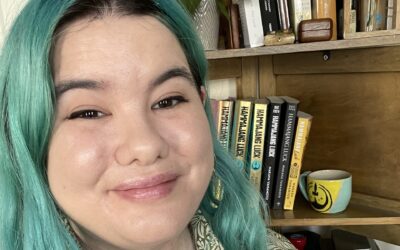
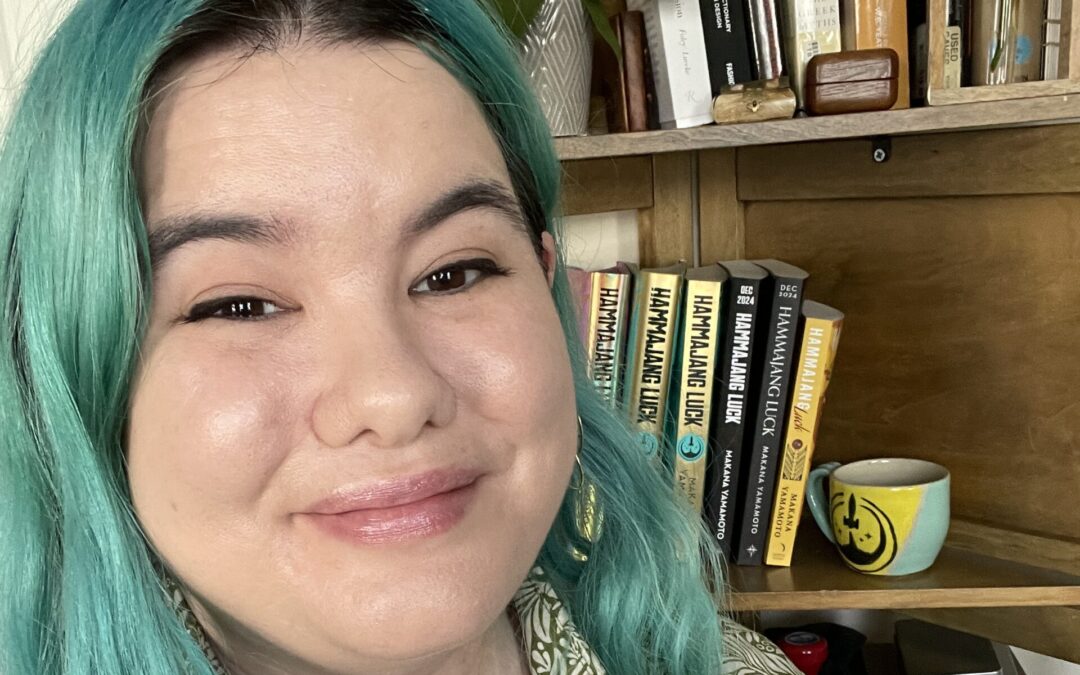
Sabina Nordqvist began writing as a way to distract herself from chronic pain and illness, and before long, she couldn’t stop creating imaginary worlds and swoony book boyfriends. When not immersed in her latest project, she’s likely doing physical therapy, reading, or searching for answers to her latest mystery symptom. A polyglot with three nationalities, she’s spent many years abroad and loves nerding out over intercultural communication and the languages she’s picked up along the way. IT’S ALL IN YOUR HEAD is her debut novel. You can learn more at nordqvistbooks.com.
I had the opportunity to interview Sabrina, which you can read below.
First of all, welcome to Geeks OUT! Could you tell us a little about yourself?
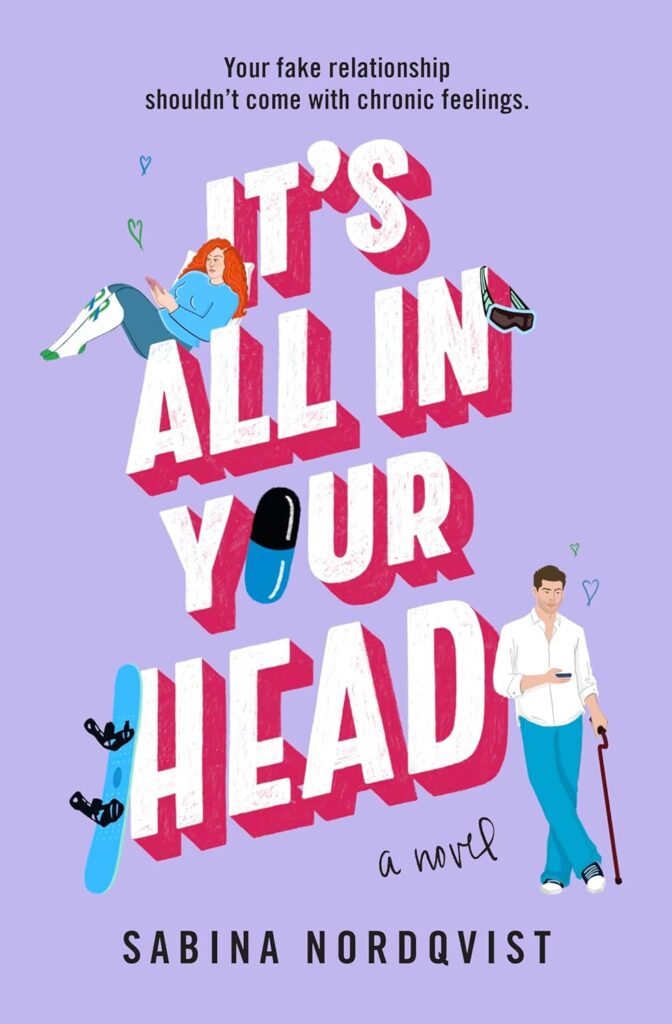
Thank you! I’m an author, language nerd, and disability advocate who fell into fiction writing as a way to cope with chronic pain, and now I can’t stop creating stories. I’m a polyglot with three nationalities, so I’m endlessly fascinated by the ways people communicate—with or without words. When I’m not writing, I’m usually at medical appointments, reading, or trying to solve the mystery of whatever new symptom my body’s decided to invent. My stories are love letters to the disability community, and to anyone who’s ever been told they were “too much.” It’s All in Your Head is my debut novel. It comes out February 10 with Grand Central Publishing.
What can you tell us about your debut book? What was the inspiration for this story?
It’s All in Your Head is a contemporary romance about a chronically ill woman who starts fake dating the hot new guy in her online support group, only to discover when they meet in person that he’s an Olympic snowboarder with a career-ending injury that’s as infamous as his dating history. The novel explores the intersection of chronic pain and intimacy, while highlighting the struggles disabled people can face in public perception, relationships, and personal identity. But it’s also swoony, emotional, and full of heart, with themes of vulnerability and finding your people. The inspiration for it came from a desire for more romance that didn’t sanitize disability, magically cure us, or leave out the joy and humor that make our lives rich. I wanted to write a romance that honored bodies like mine, where people living with the daily realities of chronic pain and illness also got to have sweeping, sexy love stories. I also hadn’t found any novel that included idiopathic intracranial hypertension, which is a rare neurological condition that I live with, so I knew I wanted to feature it with Skylar. The inspiration for Pike came from my own experience and grief over losing snowboarding to disability. The rest of the plot easily clicked in place once I had the support group aspect figured out.
As a writer, what drew you to the art of storytelling, especially romance?
Romance has always been about hope. It’s the one genre that promises things will work out in the end, and when you’re living with unpredictable pain or illness, that kind of hope can feel radical. Storytelling became a space for me to imagine love that isn’t conditional on health, where intimacy adapts instead of disappearing, and a happily-ever-after doesn’t erase pain but makes space for it instead. Romance, more than any other genre, lets me explore care, humor, and desire in bodies that the world doesn’t always treat as worthy of them. There’s something profound about saying, “we deserve this too,” and meaning it. Writing is also a lot of fun for me and gives me a mental break from my own chronic pain. I love imagining new worlds and plotting the perfect third act breakup or grand gesture for a couple.
In addition to writing fiction, you also work as a sensitivity reader. Could you describe your line of work for us if possible?
I specialize in authenticity reading for disability representation, which can include portrayals of physical disabilities, chronic pain, chronic illness, mental health conditions, and neurodiversity. I draw on lived experience and community-informed knowledge to flag stereotypes, gaps, or unintentional biases while offering guidance on how to write from a place of empathy and nuance. I work with Big Five publishers as well as individuals, usually on full manuscript or graphic novel critiques, but I also offer consultations if someone wants to discuss their overall story or a specific plot point. A lot of people want to “get it right,” but don’t know where to start.
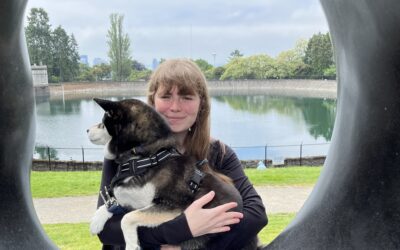
How would you describe your creative process?
I tend to take a lot of time to develop a story in my mind before I begin drafting. I start with character dynamics and the bigger beats, then let the story evolve through dialogue and random snippets. I like knowing where my characters are headed emotionally, even if I don’t know every scene along the way. I constantly jot down notes on my phone, so by the time I’m ready to draft, I will have accumulated between 50,000-100,000 words of snippets or thoughts. It’s a mess to organize! Because of chronic pain, I rely on dictation software and write in short bursts, often from a recliner with my mic. I’ve learned to accept that rest is part of the process. It’s not tidy, but I’ve built flexibility into how I create.
What are some of your favorite elements of writing? What do you consider some of the most frustrating or challenging?
I love writing dialogue and those moments when two people say everything and nothing at once. I’m obsessed with emotional subtext and the small gestures that mean everything. The hardest part is pacing my creative energy around my health; sometimes I want to write for ten hours, but my body says, “ten minutes.” My dictation program also gives me a lot of hurdles, so I feel like half my writing time is spent trying to outsmart the program before it turns a tender line into something unrecognizable. And like a lot of writers, I dread writing a synopsis. It’s often necessary but requires a different type of skill, and it usually takes me longer than the whole book to nail it down.
As authors, who or what would you say are some of your greatest creative influences and/or sources of inspiration in general?
Most of my ideas start with a question: what if we gave this classic romance moment—a meet cute, a beloved trope, a grand gesture—a disabled lens? What if we didn’t fade out when health got complicated, but leaned in instead? That’s my creative heartbeat. I’m drawn to stories that blend humor, swoon, and delicious angst. I love twists that change the entire trajectory of the story. I’m also deeply influenced by the disability community and the day-to-day experiences of what it’s like to live in a body like mine. Among others, Alice Wong’s work has really impacted how I think about love and care. Disability Intimacy is a great example of the type of themes I hope to portray with my novels.
What’s a question you haven’t been asked yet but that you wish you were asked (as well as the answer to that question)?
I do sometimes wish more conversations with disabled authors went beyond representation and what diversity we bring to the table. Representation is such an important part of my work, and I’ll never stop gushing about that, but it’s not the only thing I love talking about. At the end of the day, I’m a romance writer—I get excited about banter, pining, and a really good kiss scene as much as anyone else. I also want to gush about what makes fake dating chaos work, or how to build a slow burn that feels like exquisite emotional torture in the best way. For many of us, disability shapes how we write, but it doesn’t limit what we write. It’s the lens, not the boundary.
What advice might you have to give for any aspiring writers out there?
Start with what obsesses you. Write the story that keeps you awake because no one else has told it yet. Someone out there needs exactly that story. Don’t wait for your circumstances to be perfect. You can build a book out of voice notes, small victories, and stubbornness. Write in five-minute bursts if that’s what you have. I like to remind myself that even if I only write 233 words a day, I can finish an 85,000-word novel in a year. That’s a couple of paragraphs per day. Read widely, study craft, and make other writing friends who will support you and help you grow. But mostly: keep going.
Are there any other projects you are working on and at liberty to speak about?
I’ve always planned for It’s All in Your Head to be part of a standalone series featuring the women in Skylar’s support group. Since I wrote It’s All in Your Head six years ago now, I’ve had plenty of time to write those stories as well as other contemporary romances that I hope to share with the world whenever the publishing gods see fit. I also write romantic fantasy, so as they say, ‘watch this space.’ I have a newsletter where I’ll be sending updates on any upcoming works!
Finally, what books/authors would you recommend to the readers of Geeks OUT?
There are so many more novels these days that blend romance and nuanced depictions of disability. Some great ones written from lived experience are The Broposal by Sonora Reyes, Seven Days in June by Tia Williams, Up Close and Personal by Ana Holguin, Behooved by M. Stevenson, Conditions of a Heart by Bethany Mangle, The Kiss Quotient by Helen Hoang, Even if We’re Broken by AM Weald, Ellie Haycock is Totally Normal by Gretchen Schrieber, and Time and Time Again by Chatham Greenfield. And not related to disability representation, but because I’m Swedish, I will never not recommend A Man Called Ove by Fredrik Backman.
0 Comments