
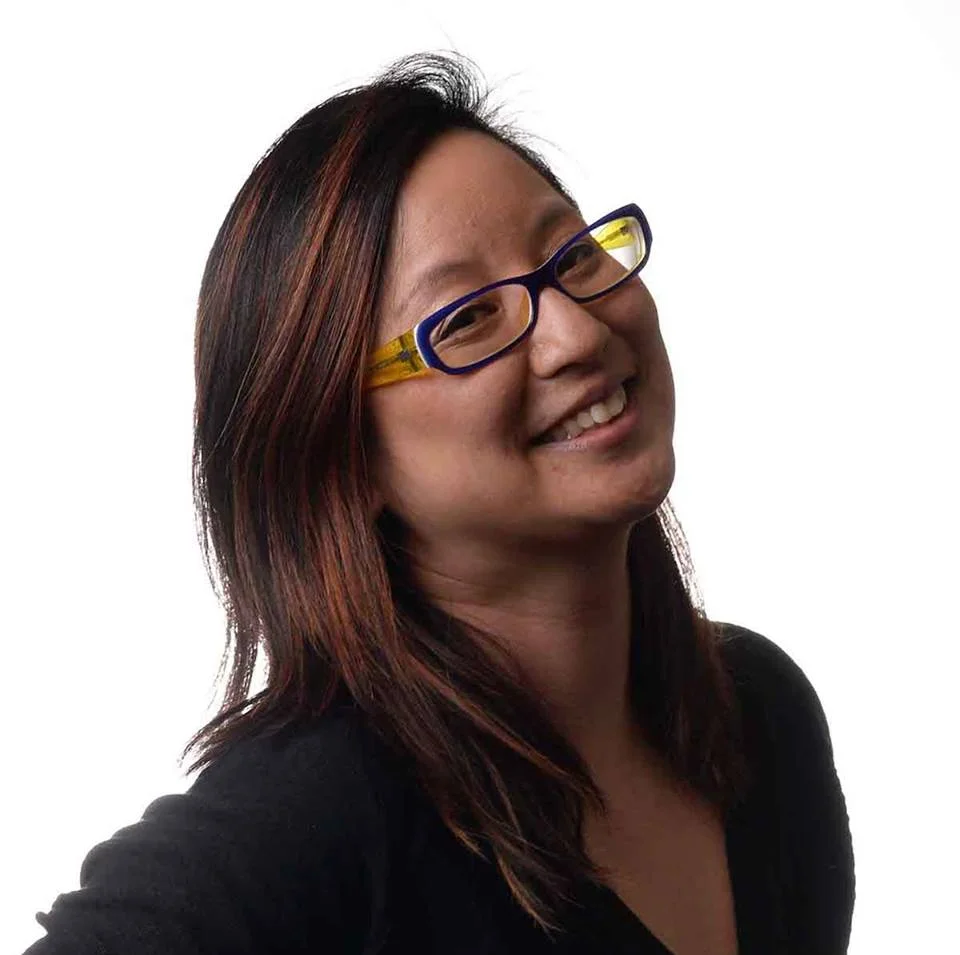
Amy Chu is a self-starting Harvard graduate who formed her own company, Alpha Girl Comics, in 2010 with her friend, Georgia Lee. They felt there was a severe lack of female voices in the comic book industry at the time and wrote several stories for the Girls Night Out anthology series which they also published! Amy has worked steadily over the past 12 years with projects at Marvel, Valiant, DC, Dynamite and more. She has a fantastic run on Red Sonja for Dynamite Entertainment and wrote Poison Ivy: Cycle of Life and Death with artist Clay Mann.
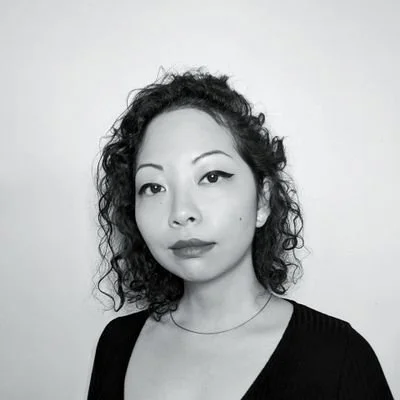
Soo Lee is a Cartoonist and Illustrator residing in New York City who is most known for her comics and graphic novels. Her work has been published through DC Comics, Dark Horse/Berger Books, Dynamite, Archie, AHOY, AfterShock, Valiant,
Black Mask, Chapterhouse, BOOM, Action Lab Entertainment, Image Comics. Analog Sci-Fi Magazine, and SIERRA Magazine.
I had the opportunity to interview both Amy and Soo, which you can read below.
First of all, welcome to Geeks OUT! Could you tell us a little about yourself?
Amy Chu: I’m a second generation Chinese American, born in Boston, raised all over America, but mostly Iowa. I was always an uber geek. I played all the early computer games like Zork, liked Doctor Who, D&D when it was deeply unfashionable, and then I went to MIT where it was all totally cool and not out of place… Students LARPed in the basement tunnels. Everyone read comics, it wasn’t a niche thing at all. Even the student center had its own comic store.
Soo Lee: I’m a Taurus, left-handed and my favorite color is green. (I’m just kidding.) I’m a comic book creator and writer, residing in NYC. I’ve been published by Darkhorse, Archie, DC Comics, and Dynamite.
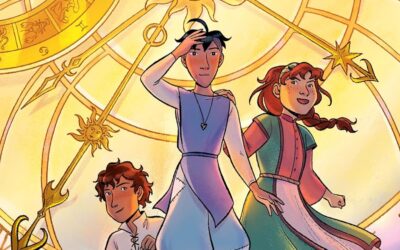
What can you tell us about your latest series, Carmilla: The First Vampire? What was the inspiration for this story?
AC: It was really a mission to do right by the character and my desire to write something really dark. I had just read the original on Gutenberg and so many articles talked about the queer “overtones” and I’m like, it’s a straight up lesbian story, there’s no “overtones.” The basic premise is, let’s just assume she survives, what would she do? If I were her, I would get the hell out of Europe and head to the New World, specifically New York City, where I can meet some cute girls. Then Karen Berger invited me out to lunch at San Diego Comic-Con 2019 and asked me to pitch some ideas. The rest is history, as they say.
SL: Asian Mythological demons were a big inspiration for creating some of these characters. I also wanted the art to flow from Volume 1 to 2 as seamlessly as possible and kept with the dramatic color themes as well.
What was it like adapting the original vampire story of Carmilla with a 90s urban fantasy twist with a butch Asian American lead?
AC: Soft butch, lol. I thought if anything it was more in keeping with the queerness of the original Carmilla than what we’re seeing on TV and streaming.
SL: I may be biased but I think it’s really refreshing. Asian characters usually aren’t the first demographic people think of for remakes and adaptations. It’s also really fun to draw!
As creators, what drew you to the art of storytelling, specifically speculative fiction and comics?
AC: I love that the craft of storytelling changes with innovations in technology as we move from print to various forms of digital, and especially the accessibility and immediacy of the comics medium. Comics are for everyone, and anyone nowadays can create something and put it up digitally or print it out.
SL: I think making comics is very unique. It’s like a silent still movie that adheres to a specific structure, to allow the readers to follow what’s happening. It’s a wonderful escape into another universe while enjoying really pretty pictures.
How would you describe your creative process?
AC: I’m a deadline driven person, first of all. I’m best when I have a little time pressure. But in terms of ideation, I keep a tone of notes of things that just seem interesting for me to explore- articles, observations about people. I tend to draw inspiration from real life, rarely from fiction. Even adaptations such as Carmilla, a lot of it comes from a composite of real people in New York City Chinatown in the ’90s. I need to have some curiosity about the subject for me to explore. And finally, I need a theme that resonates with me for the story to work.
SL: This is a bit complicated to describe because it all depends on what project I’m working on.
When I’m drawing covers, there are classic paintings and some of my illustrations I give homage to.
When I’m drawing comics, I use movies as inspiration for panels and visual storytelling.
If I’m writing, I also use some of my favorite movies and tvs, especially for dialogue. Sometimes it’s tricky to write down relatable dialogue.
I also have a pretty eclectic playlist to get me in the zone or movies. I rarely work in silence.
Growing up, were there any stories in which you felt touched by/ or reflected in? Are there any like that now?
AC: That’s an interesting question. I spent most of my childhood in libraries reading everything, but mostly sci-fi/fantasy, more to learn and to escape. There was very little in the way of female Asian American protagonists and non-tropey, certainly not queer. There’s so much more now.
SL: I was such a big fan of Anne Rice books as a teen. I remember spending hours in the library reading those series and then buying the ones that weren’t available. Anne Rice books are such a specific flavor and so original because of the imprint it had in my mind as a teen, I don’t think there is anything else like it. Yet there are so many stories created because of them.
As a writer/artist, who or what would you say are some of your greatest creative influences and/or sources of inspiration in general?
AC: Early on it was Mike Mignola, O. Henry and Twilight Zone. Now, as I write longer series I’m not so sure.
SL: I find a lot of inspiration from classic and contemporary art. I love Millais, Masses, Bernie Fuchs, and Yoshitaka Amano. There are more artists but it would be too long to write out.
What are some of your favorite elements of writing/illustrating? What do you consider some of the most frustrating and/or difficult?
AC: I love the lettering stage when I get to see my words on the art. I hate getting conflicting notes from multiple people.
SL: I think both have difficulties but for different reasons. I think drawing is the easiest way to show what you’re trying to relay but writing when done right, is so beautiful. But I think it’s hard to know if what you’re writing is relatable and if the voices are the right ones, especially with dialogue.
I’ve been drawing longer than I’ve been writing (fanfics not included) so I think that comes more naturally for me and there’s something so liberating to tell the stories you want visually.
Aside from your work, what are some things you would want others to know about you?
AC: I’m a human being that likes coffee. If you see me at con, bring me coffee!
SL: I have a podcast with Sweeney Boo called Spill Your Guts and we talk about freelance life and mental health. I’m a big believer in normalizing it and talking about it publicly.
We give a little insight about our personal struggles and even have guests who are brave enough to bare a bit of their souls to strangers.
What’s a question you haven’t been asked yet but that you wish you were asked (as well as the answer to that question)?
AC: My favorite donut. Answer: The Blueberry Bourbon Basil donut at Blue Star Donuts.
SL: Not sure what that question would be but sometimes people ask me what I would do if it wasn’t art. I would be a mortician or some other medical field in post-mortem. It was something I was going to pursue if I didn’t go to art school.
What advice might you have to give for aspiring writers?
AC: Read good stuff, meaning stuff you like, and understand why it works. Then just do it, and a lot. Of course, don’t just shit it out but also don’t get too hung up and precious about your work. Make it the best you can under the circumstances and move on. If you aspired to be a runner, you wouldn’t pick a marathon to be your first race and enter without training yet that’s what a lot of writers seem to be doing. Just do a mile first, better, faster, farther.
SL: (I’m guessing this is more applicable to Amy.) But in general, don’t worry if your project/story is going to be popular. Create the things you want and there will be an audience. It’ll resonate with someone out there.
Finally, what LGBTQ+ books/authors would you recommend to the readers of Geeks OUT?
AC: graphic novels:
The Third Person by Emma Grove
Monstrous by Sarah Myer
Novels by queer AANHPI women:
Last Boat Out of Shanghai by Helen Zia
Last Night at the Telegraph Club by Malindo Lo
Poetry by Kitty Tsui
SL: (I am ashamed to say I don’t read books nowadays because I spend most of my time working. I’m very boring.)


0 Comments