
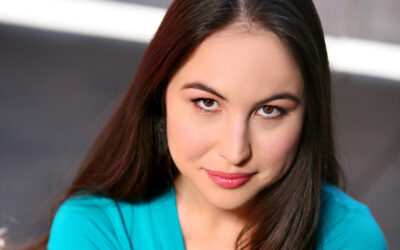
Sam Wachman is a writer from Cambridge, Massachusetts with Ukrainian roots. His work has appeared in Sonora Review, Berkeley Fiction Review, and River Styx. Before writing The Sunflower Boys, he taught English to primary schoolers in central Ukraine and worked with refugee families in Europe and the United States.
I had the opportunity to interview Sam, which you can read below.
First of all, welcome to Geeks OUT! Could you tell us a little about yourself?
I’m Sam, I’m from Cambridge, Massachusetts, and The Sunflower Boys is my debut novel – it came out this August. Before The Sunflower Boys, I taught English as a foreign language in Ukraine (and before that, I was an EMT, worked on a pediatric organ transplant ward, worked on a farm, had no idea what I was doing with my life…)
What can you tell us about your book, The Sunflower Boys? What was the inspiration for this project?
I guess the story begins with my great-grandparents, who immigrated to Canada and the States from Ukraine. I was always curious about my family’s origins, so I decided to go to Ukraine and learn Ukrainian. (My great-grandparents were Jewish and spoke Yiddish, so this was kind of a silly thing to do in retrospect.)
I ended up teaching English there, in the region where my family comes from. I taught at a one-room schoolhouse with an enrollment of 16-ish kids, depending on the year; in practice, I really just taught the 5 who took English. Everything there reminded me of my grandparents at first – the way people spoke, cooked, gestured, laughed, decorated their homes – but after a little while, my relationship to Ukraine became less about genealogy and more about the friends I made and the kids I worked with.
When COVID hit, I ricocheted back to my childhood bedroom in Massachusetts, but I kept teaching online, and I planned to move back when restrictions were lifted. At that time, I started writing The Sunflower Boys in its embryonic form. It was the first draft of a novel set in Ukraine told from the perspective of a kid around my students’ age. The war hadn’t started yet, so of course that wasn’t a component of the novel.
I chose to write a gay coming-of-age novel in particular because one of my students had confided in me about their own sexual orientation, and I remember thinking “wow, this kid’s experience is going to be so different from my own.” I grew up in Cambridge, Massachusetts, one of the most progressive places in America. Before I was born, my mother was in a documentary advocating for teaching gay issues in schools. For a while, there were billboards in Idaho or something with my mother’s face and allegations that she was ‘brainwashing children into the homosexual lifestyle’. Needless to say, I faced zero friction around my own sexual orientation growing up. The experience of growing up gay in rural Ukraine was totally foreign, and elicited both worry and curiosity in me.
I was in Denmark in what was supposed to be my last semester of university when the war started. One night, one of my students texted me that he was anxious about a chess tournament the next day, and we chatted for a little while before we bade each other good night. Then sometime after midnight, my phone rang, and it was my student. He said: “I think the chess tournament is cancelled, because Russia has invaded.”
Suddenly, my friends and my kids were in Poland, in Romania, in basements, in train stations, in IDP camps. And so I made it my purpose in life for a little while to meet them where they were, to help in the very few ways I could. I stopped writing for a year. I flunked that semester of college because I just stopped showing up to class. I met my friends and my students and their families in train stations across eastern Europe. I volunteered at Berlin Hauptbahnhof where Ukrainians were disembarking with various needs and injuries. I had been working as an EMT, so I had some skills, and I could translate, although I’m a really awful translator.
So I abandoned my book entirely, and I didn’t even think of it again until a year later, when I was volunteering at a camp for Ukrainian kids just over the border in Romania. Many of the kids who I had been teaching English showed up to this camp, and we hadn’t seen each other in years in some cases, and also in some cases they hadn’t seen each other since the beginning of the war, cause, you know, one kid went to Moldova, one kid went to Poland. One evening, we were sitting around having tea and playing Uno. My students were exchanging war stories with startling nonchalance and wry humor. I said something along the lines of: “You guys should write a book.” And one of my students said “You do it. We’re busy.”
I was conflicted about that. I had never made a conscious decision to abandon my book. It had just been natural to me – the story that I was telling before, this slow, sweet, slice-of-life coming of age story – could no longer be told as I had intended. Because now the specter of war would have to loom over every scene. I could no longer write about Ukraine without writing about the war, but I certainly couldn’t write about the war. It wasn’t my war; those experiences weren’t mine.
In the end, I caved to my student and to the little voice in my head telling me to write. I came back to my hometown in Massachusetts and I was working with Ukrainian refugee families in relocation and enrolling them in benefits and such, and throughout that process I kept collecting stories from the war, and they kept sort of building inside me. There’s also a selfish angle to all of this. Writing is my catharsis, it had been for ten years at that point – I’d started writing fiction when I was thirteen, and at that point I was twenty three – and I was desperately in need of that catharsis but denying myself. So eventually I said “you know, whatever, I’ll write a few pages, nobody has to read it.”
I spent March through September of 2023 finishing my first draft. I wanted to bring both Ukraines – peacetime Ukraine and wartime Ukraine – into one work. But I was far less familiar with wartime Ukraine, and it was really crucial to be accurate. I drew a few details from an academic paper, Svitlana Makhovska’s “‘War cannot be understood, it must be felt’: 36 Days of Occupation in Chernihiv Region.” But mostly I conducted interviews. I bought one of those voice recorders and fuzzy little microphones that journalists use, and I interviewed friends, students and strangers. A few dear friends who survived war crimes were willing to share their experiences in detail and allow me to use them in my book, which was unbelievably generous of them.

Reading the description of your book, I was drawn to the fact that it focuses on queerness (a subject that is still considered taboo to talk about in many Slavic communities). What was it like for you writing that into the novel?
Writing a twelve year old gay protagonist was natural, since I remember being twelve and gay with excruciating clarity. Writing a twelve year old gay protagonist growing up in Ukraine required more research, but in the end, it came naturally as well, as I had a student whose experiences paralleled those of my protagonist, and he was generous enough to allow me to interview him and poach bits of his life story for literary purposes.
What gave me pause was writing his family’s reactions and his peers’ reactions. My experience is that homophobia in Ukraine is very much an older-people phenomenon. People (and especially men) who grew up during the Soviet occupation are often going to have more Soviet views on homosexuality. There’s very rarely friction with younger people who grew up with the internet and social media. I tried to represent that faithfully. The oldest character in the book, Did Pasha, Artem’s grandfather, doesn’t comment on homosexuality, but it’s clear that he has traditional and archaic ideas of what boyhood and manhood should look like. By contrast, the youngest character, Yuri, Artem’s little brother, accepts Artem without pause and seems confused that Artem’s sexual orientation has brought him so much anguish.
I taught kids as young as nine or ten, and as old as fifteen. When they asked me if I had a girlfriend, or if I was gay, I wouldn’t lie. I don’t believe in lying to kids and especially not about that, because I was usually the only openly gay adult that they knew, and I wanted them to know that it is entirely possible to be gay and to grow up and be a happy, healthy person.
Both Artem’s traditionally-minded grandfather and his little brother love Artem deeply. I wanted to show that as well – even if older people have outdated misconceptions around sexuality, that doesn’t preclude them from being loving, kind people. Most of all, I wanted to illustrate that Artem’s environment was casually invalidating of his sexual orientation without violence or overt hostility or hatred. I think literary depictions of homophobia tend to be quite extreme in nature. I’m sure that’s reflective of some version of reality, but it wasn’t reflective of the reality I wanted to depict. There’s no tearful scene where his mother goes “You’re not my son” or whatever. She is a good and loving mother who simply has outdated ideas; unfortunately, that causes Artem great distress.
What are some of your favorite elements of writing? What do you consider some of the most frustrating and/or challenging?
I have a recurring nightmare in which, after writing a particularly awful first draft, I shut my laptop, leave the house, and immediately die in a car wreck. My grieving parents go into my laptop, find the last piece I was working on, and publish it. The world sees my terrible writing, and I’m too far underground to do anything about it. I’ve had this dream frequently enough that I’ve actually made my parents promise not to do that.
Because I am so self-conscious about my first drafts (and second drafts, and third…) I tend to avoid writing them. If I can’t write something perfect on the first try, then my instinct is not to allow myself to write at all. That’s what I struggle with the most. When I actually allow myself to write, I love it more than anything. It gives my life meaning. I get to experience the joy of creation. But there’s so much anxiety around that creation that sometimes it overshadows the pleasure.
(I think that’s common with my generation. Social media bombards us with footage of perfect people doing perfect things on the first try. We all had to figure skate and cure a rare disease to get into college. If we don’t excel at something instantly, we should just ditch it.)
The reality is that I take immense, sometimes manic pleasure in writing. I love spending three hours on a sentence and then sitting back and reading it and thinking to myself: “That’s a damn good sentence.” I love getting inside a character’s head; I love when I’m so deeply inside of my character that I feel a little dazed when I crash-land back into my own body.
I’m a nocturnal writer. I’m writing this at 2:40 AM. Usually, I start writing around midnight, and the magic wears off by sunrise. When I write, I sit in perfect darkness with my noise-cancelling headphones on. This is the best I can do without investing in a sensory-deprivation tank (I think the salt water would damage my computer) and these are the conditions under which I’m at my happiest.
As an author who or what would you say are some of your greatest creative influences and/or sources of inspiration in general?
Literary inspiration: Swimming in the Dark by Tomasz Jędrowski; The Toreadors from Vasyukivka by Vsevolod Nestayko; Dandelion Wine by Ray Bradbury; Shadows of Forgotten Ancestors by Mykhailo Kotsiubynsky; Enchanted Desna by Oleksandr Dovzhenko; We the Animals by Justin Torres; Leaves of Grass by Walt Whitman; The Orphanage by Serhiy Zhadan; Ethan Canin’s short story Batorsag and Szerelem; Jacob Guajardo’s short story What Got Into Us; David Foster Wallace’s short story Forever Overhead.
Miscellaneous: The song I Still Remember by Bloc Party; the films The Florida Project (2017) and Close (2022); the Bigelow Preserve in Maine; my youngest friend and honorary little brother, Max, who can name the capital of every Canadian province and territory despite never having visited Canada; the word “fescue”, which is such an excellent word, and it’s such a shame that we wasted it on grass; the Charles River in my hometown, as well as all other rivers.
Aside from your work, what are some things you would want readers to know about you?
An insufferably Barthesian answer: everything I need readers to know about me is already in my work.
What’s a question you haven’t been asked yet but that you wish you were asked (as well as the answer to that question)?
That would be “Sam, which traditional Paraguayan beverage do you drink while you write?” For some reason, nobody has asked me that question. The answer is yerba mate, and in excessive quantities.
What advice might you have to give for aspiring writers out there?
It’s easy to spend hours worrying about whether your writing is good, whether you’re doing it wrong, whether your readers are going to cringe or laugh at you, whether you’ll have any readers, whether your book is going to be marketable, how you’re going to query agents, what you’re going to say at your awards speech in ten years. That’s all easy. The hard part is actually writing. So just write already, God damn it, and leave the worrying for tomorrow.
Are there any other projects you are working on and at liberty to speak about?
There are other projects that I’m working on, and I’m technically at liberty to speak about them, but I’m far too worried that I’m going to change my mind about the specifics, and then I will have made a false promise to the good people of GeeksOUT. So I’m going to hold my cards close to my chest.
Finally, what books/authors would you recommend in general to the readers of Geeks OUT?
Aside from those I listed as my greatest creative influences, I recommend Maria Kuznetsova, Stephen McCauley, and Christopher Castellani.


0 Comments