
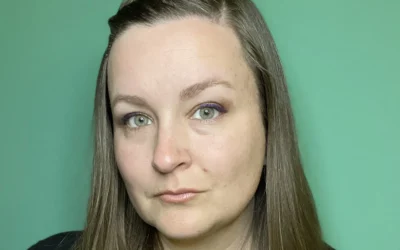
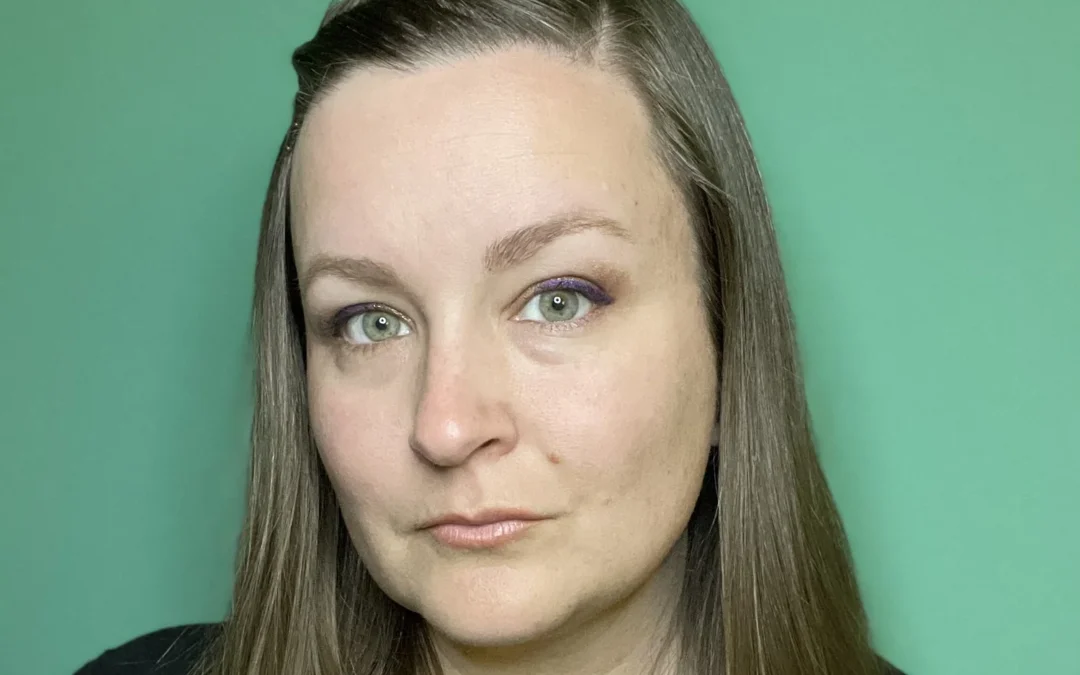
S. L. Huang is a Hollywood stunt performer, firearms expert, and Hugo Award winner who has been a finalist for a Nebula, Locus, and BSFA Award as well as the ALA Carnegie Medal. Huang has a math degree from MIT and credits in productions like Battlestar Galactica and Top Shot. The author of The Water Outlaws, Burning Roses and the Cas Russell novels, Huang’s short fiction has also appeared in Analog, The Magazine of Fantasy & Science Fiction, Strange Horizons, Nature, Reactor, and more, including numerous best-of anthologies.
I had the opportunity to interview S.L., which you can read below.
First of all, welcome to Geeks OUT! Could you tell us a little about yourself?
Let’s see, three things about me: I once played a flamenco-dancing Jawa, I have successfully explained public-key cryptography to lay people in Japanese, and there’s an obscure Wikipedia article that describes me as a world-famous sword expert (which is not true, but hilarious).
I feel like that gives a good snapshot!
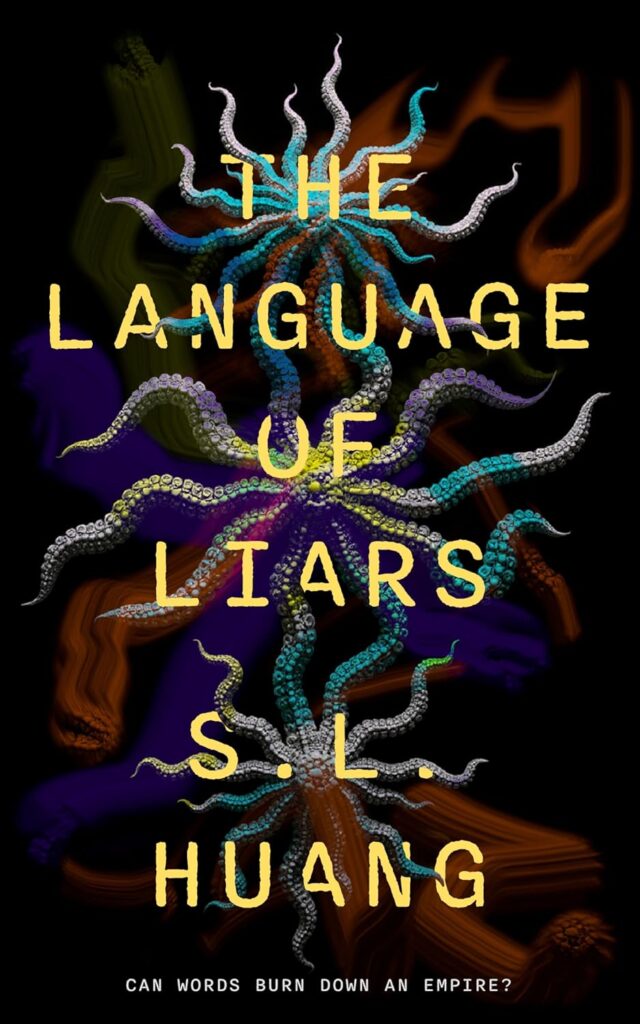
What can you tell us about your most recent project, The Language of Liars?
It’s a tough project to describe. It’s about linguistics and scifi and nerdery (so much nerdery), but it’s also about a lot of bigger and deeper themes and the way language intersects with oppression and respect and building bridges but then marching across those bridges with pitchforks and fire. I have a lot of personal history feelings regarding language, both its beauty and delight in the studies of other languages but also such studies’ tremendously-damaging role in social ills. The Language of Liars is about all of those things.
As a writer, what drew you to the art of storytelling, especially speculative fiction?
I grew up reading everything, but SFF was always my favorite. I liked how incisively it could talk about the world. Science fiction can make such dramatic and thought-provoking points about life and humans.
How would you describe your creative process?
Heck if I know! Every book seems to happen differently, to be honest. I say I would like a more repeatable process, but then, if I had one I’d probably be bored.
What are some of your favorite elements of writing? What do you consider some of the most frustrating and/or difficult?
I love falling in love with my characters. I always do.
(Of course then I do terrible things to them. Being a writer is…weird.)
My least favorite part is when I’m struggling to make a plot work and it’s just not coming together, and I can tell it’s not coming together. I have a lot of techniques for getting through but it’s a lot of grinding and hard work and it’s not fun.
As an author, who or what would you say are some of your greatest creative influences and/or sources of inspiration in general?
I’ve found it very helpful to have importances in my life that aren’t writing. A good portion of the time I end up writing about whatever life or learning event is currently chewing at me and I can’t stop thinking about. Only, I do it through the lens of science fiction or fantasy, usually.
If I’m not refilling the well enough, I get blocked. With all the messaging about “butt in chair” for writers, it’s sometimes hard to convince myself that going to a museum, or volunteering, or reading a long investigative journalism article, are all writing work in the end. But for me, they are.
I get a lot of ideas from being curious about things…stopping to ask why…clicking the link instead of just reading the headline. A friend of mine writes in her profile that she’s someone who “always reads the plaques,” and I’d say that’s me too—and it helps astronomically with being a writer!
Aside from your work, what are some things you would want readers to know about you?
Most of the time I’m a weirdo introvert just trying to muddle along and be a decent person, like so many of us…trying to figure out the meaning of life and also take action against current events while feeling powerless about them. My day to day life is very unglamorous.
What’s a question you haven’t been asked yet but that you wish you were asked (as well as the answer to that question)?
My favorite punctuation mark—I’m such a cliché; it’s the em dash.
(Followed closely by the semicolon.)
What advice might you have to give for aspiring storytellers out there?
Find community. Read. Write. Critique a lot. Keep learning.
If you pursue the business or audience sides of writing, make sure you never lose sight of what you love about it in the first place, because this career is a marathon. Most writers who debut leave publishing again within 1-3 books—in my observation, the #1 determiner in who “makes it” to have a long career in writing and publishing is who stays in it. (And it’s fine to decide not to—but if you do, find what makes it sustainable and, ideally, sustainably joyous.)
Are there any other projects you are working on and at liberty to speak about?
The first, yes, the second, no!
I hope to have public news sooner rather than later.
Finally, what books/authors would you recommend to the readers of GeeksOUT?
Here are some books coming out in 2026 that I’m quite excited about:
Code and Codex, by Yoon Ha Lee. This one I was lucky enough to get an advance copy of and it entirely ate my brain. You will never read anything like it.
The Subtle Art of Folding Space, by John Chu. I love John Chu’s writing so much, and his scifi never disappoints in its heart or thinkiness.
The Fist of Memory by Wole Talabi. Wole’s debut KILLED and his short stories are stellar; I’m so eager for this one.
Header Photo Credit Chris Massa


0 Comments