
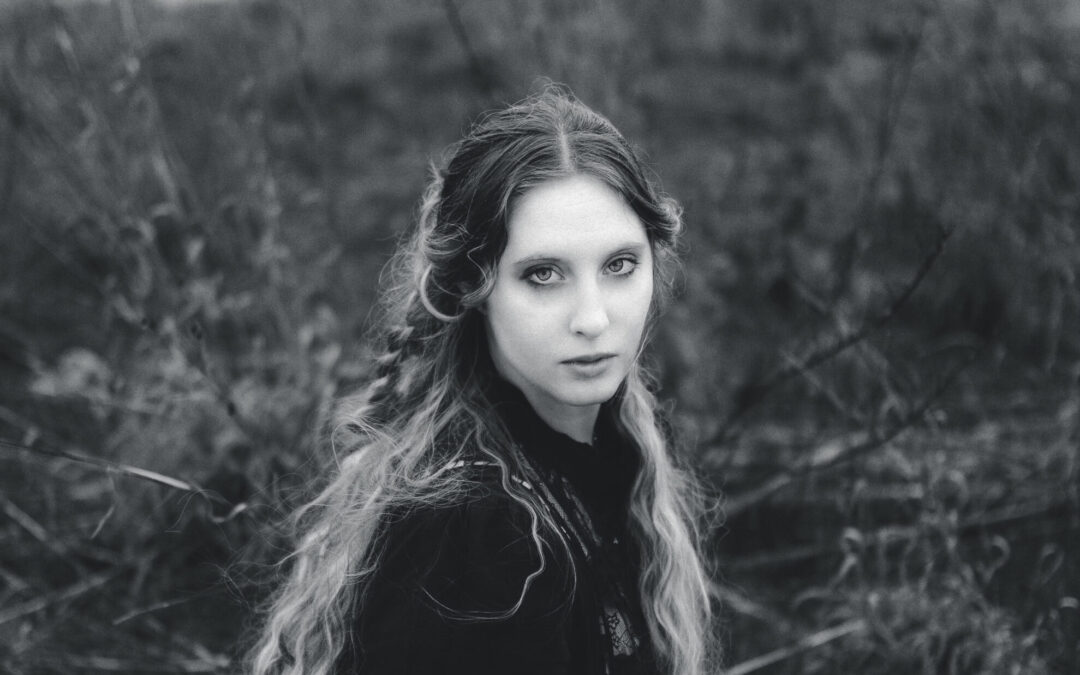
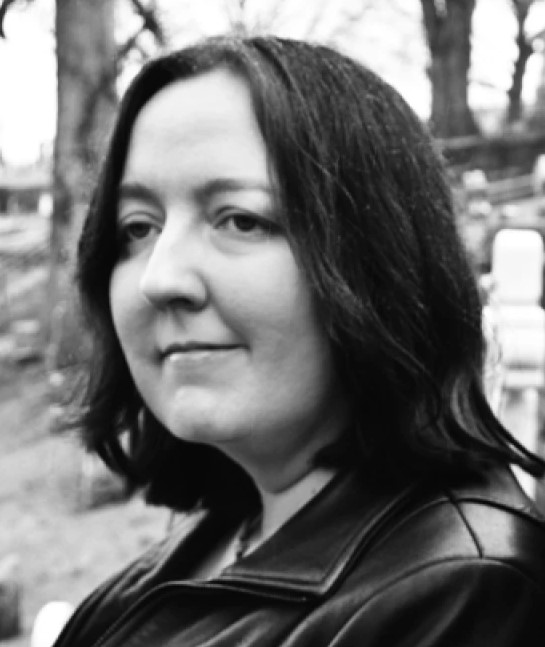
Kat Cho used to hide books under the bathroom sink and then sneak in there to read after bedtime. Her parents pretended not to know. This was helpful when she decided to write a dinosaur time-travel novel at the tender age of nine. Sadly, that book was not published. She currently lives in New York City and spends her free time trying to figure out what kind of puppy to adopt. Kat is the New York Times and international bestselling author of the Gumiho duology, Once Upon a K-Prom, and Gods & Comics.
I had the opportunity to interview Kat, which you can read below.
First of all, welcome to Geeks OUT! Could you tell us a little about yourself?
I’m a Korean-American author who loves geeking out about so many things, so I’m honored to do this interview with Geeks OUT! I particularly love K-Dramas, K-Pop, anime, manga/manhwas, history and mythology, and my newest love has been webcomics!
What can you tell us about your book, Gods & Comics? What was the inspiration for it?
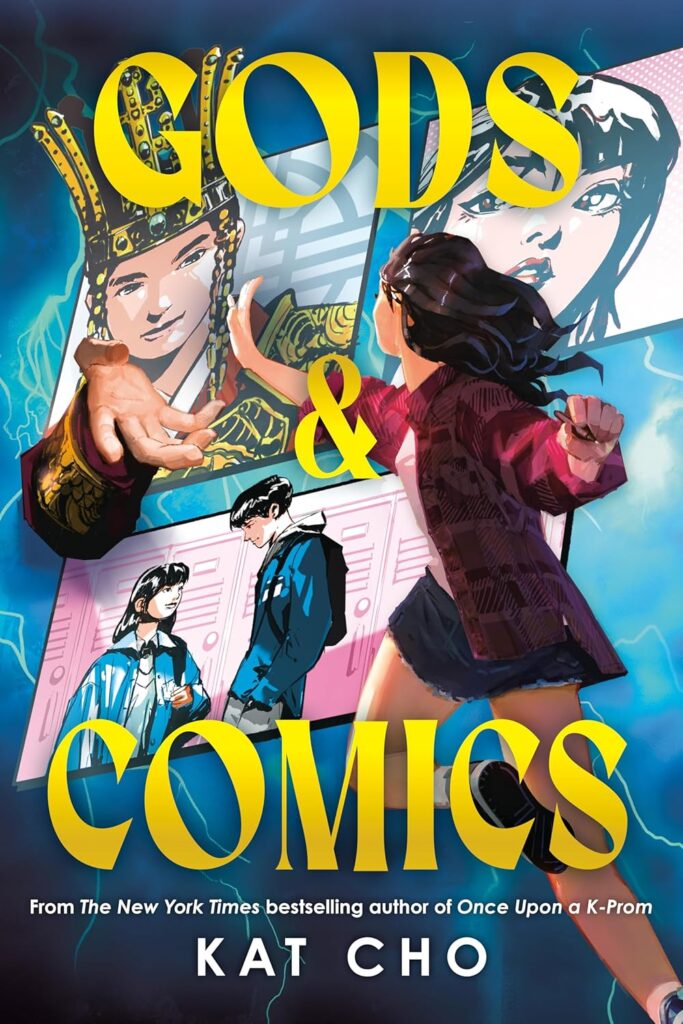
Gods & Comics is about an over-achieving high school girl who is dealing with losing her grandmother the past summer by writing a web comic based on the long-gone Korean gods that her grandmother used to tell her bedtime stories about. It goes viral and somehow brings the gods back to life.
The first inkling of inspiration was the K-Drama W: Two Worlds where a girl is pulled into a famous web comic that her father writes. But I actually loved the second half where the characters finally became self-aware and came out of the web comic. It made me wonder what I would do if my characters came to life and confronted me? How would I react? And then, of course, I had to add a Korean mythology twist because that’s something I’ve always loved reimagining in my books!
As a writer, what drew you to the art of storytelling, especially young adult fiction, speculative fiction, and romance?
I’ve loved writing stories since I was a little girl who didn’t even know how to spell (I had to co-write with my older sister because she actually knew how to write). I used to be dissatisfied with my picture books ending, I’d want to know what happens next, so we’d make it up (Baby fan fic!) Eventually, it did turn into me being inspired by the books I loved and writing self-insert versions of me and my friends going on similar journeys. I loved the idea of seeing how we would handle such magical adventures. And, finally, as an adult I realized that I could actually write my own culture into my stories, which excited me since I hadn’t really seen my Korean culture shared in books when I was growing up.
I think I’m continuously drawn to young adult even now because of the themes of finding your identity, which I think I was doing long into my adulthood. As a kid I was taught to make myself smaller for the comfort of others. It was a lesson that my immigrant mother had to learn when she came to this country, so I think I unfortunately absorbed some of that thinking. “Don’t be too loud or too culturally different.” “Blend in so people like you.” But as an adult, I’m so proud to rediscover who I am as a person who embraces and shares my culture. The other reason I love young adult is that it allows for such a fun experimentation of mixing of genres. Of course, you can do that in other categories as well, but when I started writing the YA boom allowed us to play around so much with genres and blend them in ways that were so exciting to me as a new writer.
In previous interviews, you’ve discussed how you and your characters are informed by your Korean heritage. Would you mind speaking a little of what it means to you to feature this in your books?
When I was a kid, unfortunately, I grew up in a place where most other kids didn’t know where Korea was or what it was. They vaguely knew China from kung fu movies and Japan from anime. But Korea and other Asian countries were unknown to them. So, there were times where I felt like my culture didn’t exist to anyone outside of my family. And, like I said previously, I’d never seen books with characters from my culture growing up (outside of the few Korean folktale books my parents bought me). So, I felt very isolated when it came to my Korean-ness.
So, it was a wonderful moment when I realized I could use Korean folktales I used to read to write fantastical stories based on my own culture. Every time a young reader comes up to me and says they were inspired to learn more about Korean culture from my books, or a Korean reader tells me they felt seen when they read one of my characters, I get really emotional. I didn’t realize how important this would be to me, until I was actually given this chance to share these parts of my identity that I’ve loved and enjoyed so long in isolation.
How would you describe your creative process?
I get my ideas from every aspect of my life. Of course, a lot of it comes from Korean pop culture and Korean mythology. But some of it comes from movies or TV shows I’ve watched. And sometimes it’s even from dreams I’ve had. Very often, a book starts with a “what if” question for me. Like “what if a gumiho—nine tailed fox—went to high school with the very humans she preyed on to live forever?” or “what if your childhood friend became a K-Pop idol and then asked you to prom?” What I love about these kinds of what ifs is that they can really grow into anything. They’re just the jumping off point.
I have a very long list of ideas that I jot down any time something comes to mind. It’s got several tabs and random bits of character details or world building just floating around everywhere. So, sometimes when I think I have enough to make a cohesive story out of any of it, I transfer just those details to a different document and start writing up a “story bible.” Once I think it’s detailed enough to be an actual book, I usually share it with my team to see what they think.
When it comes to the actual writing of the books, my process varies greatly, so I won’t bore you with that. But, I have had to learn to be more organized and plot out the books before I dive in so I can meet my publisher deadlines.
What are some of your favorite elements of writing? What do you consider some of the most frustrating and/or difficult?
I LOVE writing relationships. How one person can challenge or change another person. It’s the core of everything I write. Not even just romantic relationships, but friendships and familial relationships are so important as well. One of my favorite romance authors growing up focused a lot on familial relationships and I realized later on that it was hugely influential on how I write. Maybe because I’m so close to my own extended family. But I think it’s so important to acknowledge how those people can shape who we are, especially as we’re developing our sense of self in our teens.
The most difficult is description. I am horrible at including descriptions in my first drafts (and maybe even in the final products). I have writing friends who love going into details about setting and outfits and details of the world. But I tend to focus more on the emotions and dialogue when I’m first writing a story. Many of my editorial letters include a section about the need to flesh out the description of the world and what some side characters even look like as I often forget to include that in initial drafts (oops).
As an author, who or what would you say are some of your greatest creative influences and/or sources of inspiration in general?
I am hugely inspired by K-Dramas, the way they use backstory and humor and even melodrama to tell stories. I love so many of the themes (which are often rooted in how Koreans just tend to think in general). One of my favorite themes is the idea of how we’re all connected. The most extreme motif is the red string of fate, which is an idea that two fated souls are connected by a red string. I actually included it in my first book, Wicked Fox. And it shows up a lot in K-Dramas. Also, our original folk religion, as well as Buddhism and Taoism, believes in reincarnation. So, there is often a concept of being connected in a past life and how that might affect you in your current life (this may be a huge inspiration for my upcoming book House of Forgotten Souls).
Aside from your work, what are some things you would want readers to know about you?
I am very food motivated. If you want to talk food, I’m your girl. I also really love arts and crafts, and I think the reason I’m very into it is because of the immediate pay out. Writing and publishing a book takes months, sometimes years. It is a very long process before you have a final version. But with crafts, you can make something in a day or even an hour. So, my suggestion to any aspiring authors is to also find a creative hobby outlet that lets you have a final product quickly to appease that need.
What advice might you have to give for aspiring storytellers out there?
All stories are important and valid as long as you’re being authentic to yourself while you’re telling it. Even if you’re writing the millionth Sleeping Beauty retelling, it is going to be unique because it’s the first time you are doing the retelling. You, as the story teller, are an important variable in how the story develops and evolves.
Are there any other projects you are working on and at liberty to speak about?
Yes! I’d love to talk about my upcoming romantic fantasy House of Forgotten Souls, which is coming out in the beginning of 2027! It is inspired by our mythology of reapers, which we call jeoseung saja, as well as shamans and ghosts and the afterlife. It’s set in K-Town where a family of shamans run a Korean bathhouse (jjimjilbang) that helps wayward spirits “wash away” their regrets so they don’t weigh the soul down in the river that takes them to the underworld. If a spirit is weighed down too much they’ll sink to the bottom and never be reborn. Of course, there are reapers who don’t care about the mission of these shamans, all they want is to delivers souls to the river. Which causes one (hot) annoying reaper to butt heads with the teenage shaman who is sent out into the city to collect spirits. But soon it’s discovered that spirits are disappearing and a ghost who’s not really a ghost might be the key to figuring out what’s happening. It’s lightly inspired by the K-Drama Hotel Del Lunabut also Goblin and Oh My Ghostess! (plus, if you love K-Pop Demon Hunters the Saja boys are based on jeoseung saja and Huntrix/the hunters are mudang/shamans!)
I loved incorporating the mythology of reapers into this book. I explored them very lightly in my second book, Vicious Spirits, but I knew I always wanted a book that featured them more prominently. I also had the great fortune of getting in touch with a couple of mudangs (Korean shamans) who helped me write the shaman characters. They’re very important spiritual practitioners of Korea’s oldest folk religion who can commune with spirits. But they also have many rituals that actually hold tales and legends of our history!
Finally, what books/authors would you recommend to the readers of GeeksOUT?
She is a Haunting by Trang Thanh Tran, The Coven Tendency by Zoe Hana Mikuta. Anything by June Hur, she writes amazing Korean historical mysteries, her newest is Behind Five Willows. Lyla Lee writes really sweet YA romances, I really loved Flip the Script.
0 Comments