

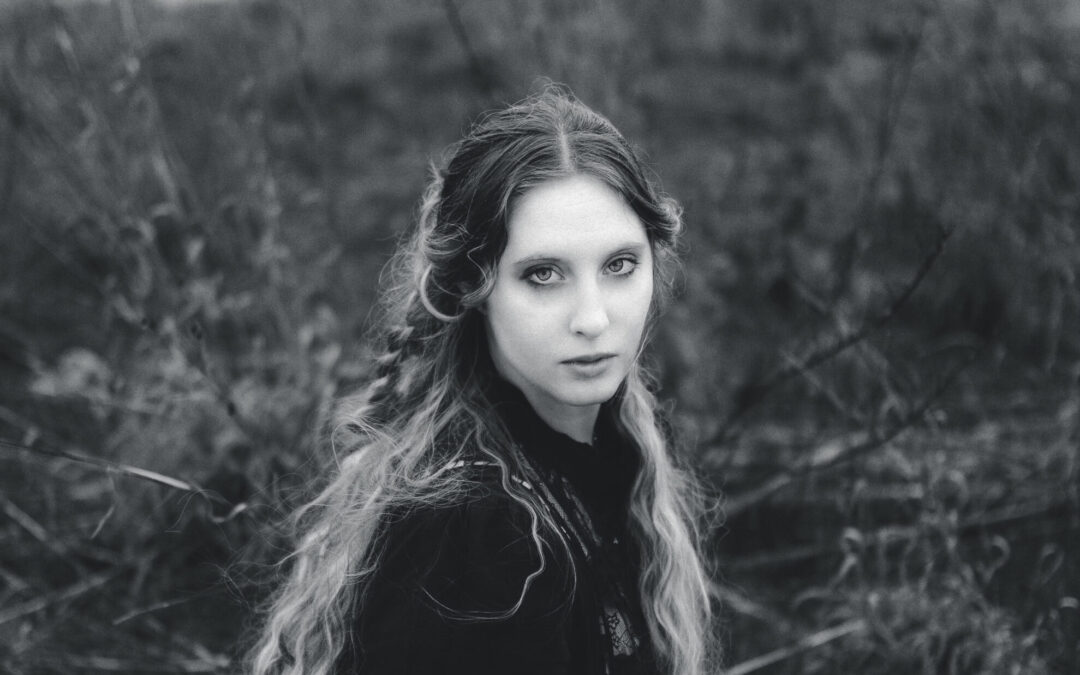
Peace Mbengei grew up in Nairobi, Kenya. She graduated from the University of Nairobi with a Bachelors degree in Medicine & Surgery and earned a Masters degree in Public Health from the University of London. She was longlisted for the 2019 Writivism short story prize and her short fiction has appeared in several magazines. She caught the writing bug when she was a little girl. Fortunately, they are yet to find a cure and she hopes they never will.
I had the opportunity to interview Peace, which you can read below.
First of all, welcome to Geeks OUT! Could you tell us a little about yourself?
Hello! I am a horror author and medical doctor originally from Kenya, now based in Australia. My work is heavily inspired by African folklore, especially the superstitions I grew up around. I’m fascinated by the intersection of fear, grief, identity and survival, and I love writing horror that explores these psychological themes through stories that feel both unsettling and hauntingly relatable.
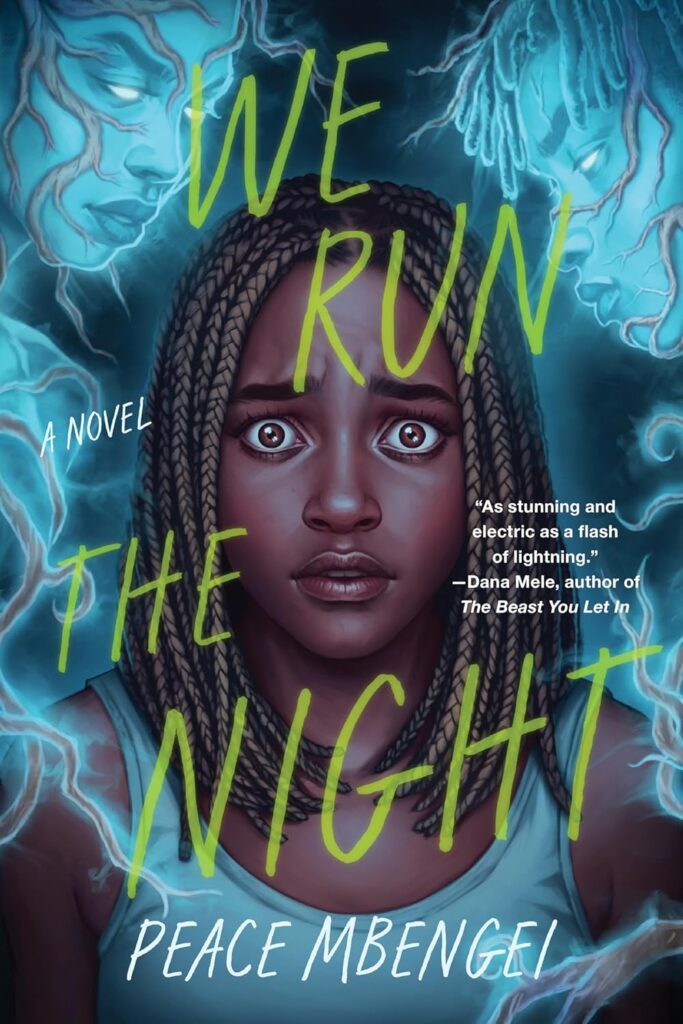
What can you tell us about your book, We Run the Night? What was the inspiration for it?
We Run the Night is my debut YA horror novel with speculative elements. It follows an introverted teenage girl trapped in an elite, isolated boarding school where terrifying creatures roam the grounds at night, turning the campus into a living nightmare after dark. At the same time, she is grieving the recent loss of her father while trying to survive academic pressure and bullying. When she begins transforming into one of the creatures herself, she struggles with alienation, shame and fear of exposure, themes that I think many queer readers may especially connect with.
At its core, the book explores grief, identity, fear, and survival. It examines how institutions like schools can fail the young people they are meant to protect, and how courage is often not the absence of fear, but the decision to stand up for yourself and others despite it. The story was inspired by a childhood memory that stayed with me for years. During a family vacation, there was a blackout one night, and outside our building were people running through the darkness, screaming and making noise. It was deeply unsettling. Later, I learned about night runners, figures feared in parts of Western Kenya, particularly in the Luo community. They are said to roam at night, throwing stones, making noise, and disturbing entire villages. Some people believe night running is inherited or even spiritually passed on through association, such as marriage, while others see it as something more psychological or social. Night runners are often feared, ostracized, and violently punished once discovered. What fascinated me most was the idea of being trapped by something people believe makes you dangerous or wrong, whether or not you chose it. There is something tragically human in that. Years later, I walked past a high school and saw students running across the campus at dusk, and I suddenly thought: what if the night runners were trapped inside a school? That image became the seed of the novel.
The theme of grief is also deeply personal to me. I lost my father as a teenager, and writing this book became a way of exploring how loss breaks and reshapes young people, especially when the academic world expects them to keep functioning as though nothing has changed. Ultimately, We Run the Night is about surviving systems that fail vulnerable people and holding onto your identity in a world that fears difference and tries to reshape it into something monstrous.
As a writer, what drew you to the art of storytelling, especially speculative?
It started when I was very young. I would secretly write down people’s conversations at home in script format, then change the names and dialogue to create fictional stories out of them. At the time, it just felt like a fun game, but looking back, I think that was my earliest introduction to storytelling.
My parents were both avid readers, and they turned our home into a proper library. We also had limited screen time growing up, so there was a lot of space for imagination. I was constantly reading, daydreaming, and inventing stories. Eventually, it reached a point where I had hundreds of characters and entire worlds living in my head, with different storylines unfolding while I went about my day.
I think that’s what drew me so strongly to speculative fiction in particular. I love fiction that bends reality in order to explore something emotionally true. Horror and speculative stories allow me to take ordinary fears and transform them into something strange, heightened, and unforgettable. In many ways, it still feels like an extension of what I was doing as a child: taking the real world and reshaping it into something darker, stranger, and more revealing.
How would you describe your creative process?
I usually wait for an idea to come to me, a small crumble of inspiration from the multiple worlds constantly living in my head. I don’t write it down immediately, because I find that a truly good idea lingers. It stays with you, excites you, and slowly grows into something you absolutely have to put on paper.
When the idea has “budded,” as I like to call it, and I know it is going to stay with me, I start by outlining the plot and building the characters around it. I prefer writing a very clean first draft, so I usually do not begin the novel until I have the major chapters and story beats figured out. Of course, this rarely stops the story from changing as I write. Characters evolve, plot details shift, and sometimes the story reveals things I did not initially plan for. I try to allow that flexibility, because it never fully feels like the story belongs to me anyway. I often feel more like a vessel weaving it into existence.
I try to finish the first draft within two months, then let it rest for a while before diving into revisions. The second draft is where I focus on structure, emotional consistency, and making sure everything actually makes sense. After that, I share it with beta readers, tighten the plot further, and then send it to my agent so she can help me uncover even more plot holes and character weaknesses.
The final stage is polishing the prose itself. That is usually the moment when the story begins to feel real to me, and when I finally become excited to share it with other people.
What are some of your favorite elements of writing? What do you consider some of the most frustrating and/or difficult?
Plotting a story is definitely my favorite part of writing, because you are essentially creating an entire universe from your imagination, and I think there is something incredible about that. Watching characters come alive on the page, discovering their motivations, and piecing together all the twists and turns still leaves me in awe sometimes. At that stage, anything can
happen. You get to sit with the story for weeks, turning it over in your mind, exploring all its possibilities. There is something genuinely magical about that process.
The most difficult part for me is revision. Revisions require you to be ruthless with the story and cut scenes, lines, or characters you may deeply love in order to make the book stronger. That can be emotionally difficult, because by that point you have spent so much time living inside that world and growing attached to it. But I also think revision is where a story truly becomes what it is meant to be. It forces you to strip away what is unnecessary and uncover the strongest version of the book beneath it.
As an author, who or what would you say are some of your greatest creative influences
and/or sources of inspiration in general?
I’m deeply inspired by a mix of authors who write psychologically layered and socially aware fiction. I adore the work of Akwaeke Emezi, particularly their ability to write with emotional and psychological depth that feels both intimate and otherworldly. Their stories often sit in that liminal space between identity, embodiment, and transformation, which really resonates with me.
I’m also a big fan of Tiffany D. Jackson and the way she explores difficult social themes through gripping fiction filled with shocking twists. I think she does an incredible job of balancing entertainment with meaningful commentary, which is something I aspire to in my own writing. I really admire Courtney Summers as well, for her raw and unflinching portrayal of teenage life. Her writing captures the intensity of adolescence in a way that feels honest, uncomfortable, and deeply human, particularly when dealing with trauma, survival, and agency. I’m also hugely inspired by Nnedi Okorafor, whose work blends African folklore, and speculative storytelling in such a powerful and distinctive way.
Beyond books, I draw inspiration from everyday life, striking memories and conversations. I think horror is at its most powerful when the monsters reflect something real about us. Aside from your work, what are some things you would want readers to know about you? Outside of writing, I’m very music-driven. I use music almost like a tool to build atmosphere and
character. If I’m writing an irritating or chaotic character, I’ll blast punk rock to get into their headspace. If I’m writing someone calm or introspective, I’ll switch to classical music. My writing space basically turns into a rotating emotional soundtrack—kind of like a disco, depending on who I’m trying to bring to life.
What’s a question you haven’t been asked yet but that you wish you were asked (as well as
the answer to that question)?
Have any of your characters ever tried to contact you outside of writing? Yes. Not in a dramatic, “lights flicker and the mirror cracks” way… more in a quiet, unsettling persistence. Sometimes I’ll forget a detail about a character and suddenly feel very certain they would be disappointed in me for getting it wrong. I try to ignore it, but the feeling lingers until I fix it in the story.
What advice might you have to give for aspiring storytellers out there?
I think writer’s block is something most storytellers struggle with, and while it can be caused by burnout, fear, plot structure issues or life chaos, it often shows up when you’re not truly excited about the story you’re telling, or when you’re trying to write something out of obligation rather than obsession. When a story really grabs you, it doesn’t feel like forcing
words onto a page. Instead, it feels like trying to keep up with something already moving too fast in your head.
So my advice would be: find the idea you can’t ignore. The one that stays with you, that keeps coming back no matter what else you try to write.
And once you find that story, don’t give up on it when it gets difficult. Every draft, even the messy ones, is part of learning how to tell it properly. You don’t need to get it right immediately—you just need to keep going.
Are there any other projects you are working on and at liberty to speak about?
I am currently exploring another East African folklore story that has camped in my head. It’s
still taking shape, but I’m excited by where it’s going.
Finally, what books/authors would you recommend to the readers of GeeksOUT?
Sadie by Courtney Summers
White Smoke by Tiffany D. Jackson
Delicious Monsters by Liselle Sambury
Bury Our Bones in the Midnight Soil by V. E. Schwab

0 Comments