
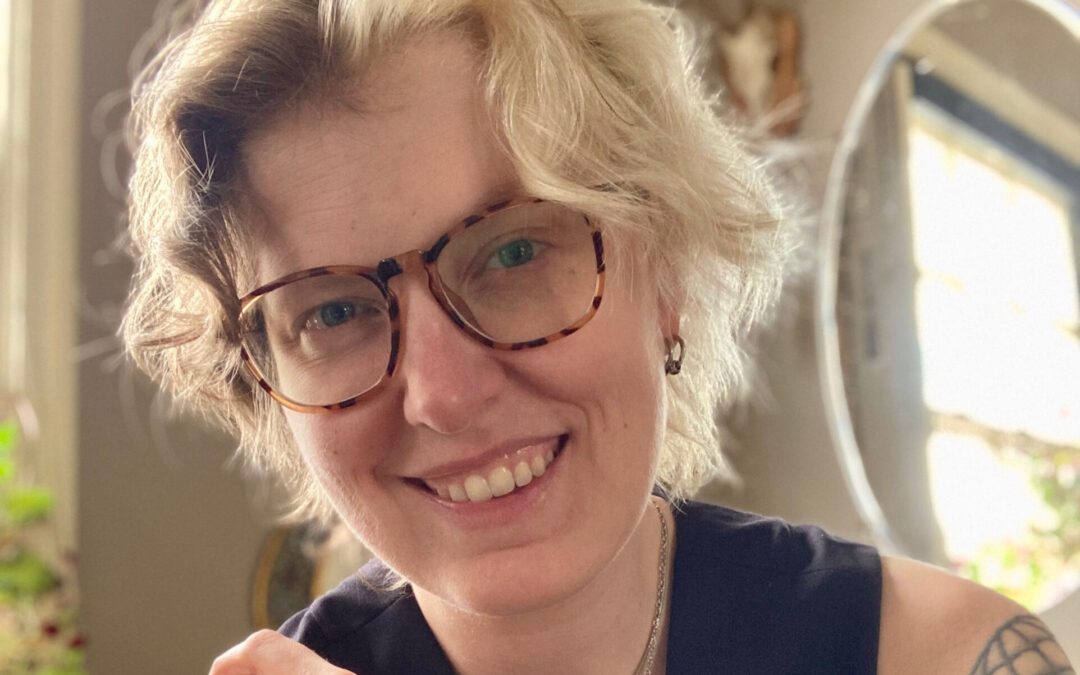
Tessa Yang is the author of the short story collection The Runaway Restaurant. Her work has been published in The Magazine of Fantasy and Science Fiction, The Cincinnati Review, Joyland, Foglifter, and elsewhere. She has an MFA from Indiana University and currently lives in Upstate New York. This is her first novel.
I had the opportunity to interview Tessa, which you can read below.
First of all, welcome to Geeks OUT! Could you tell us a little about yourself?
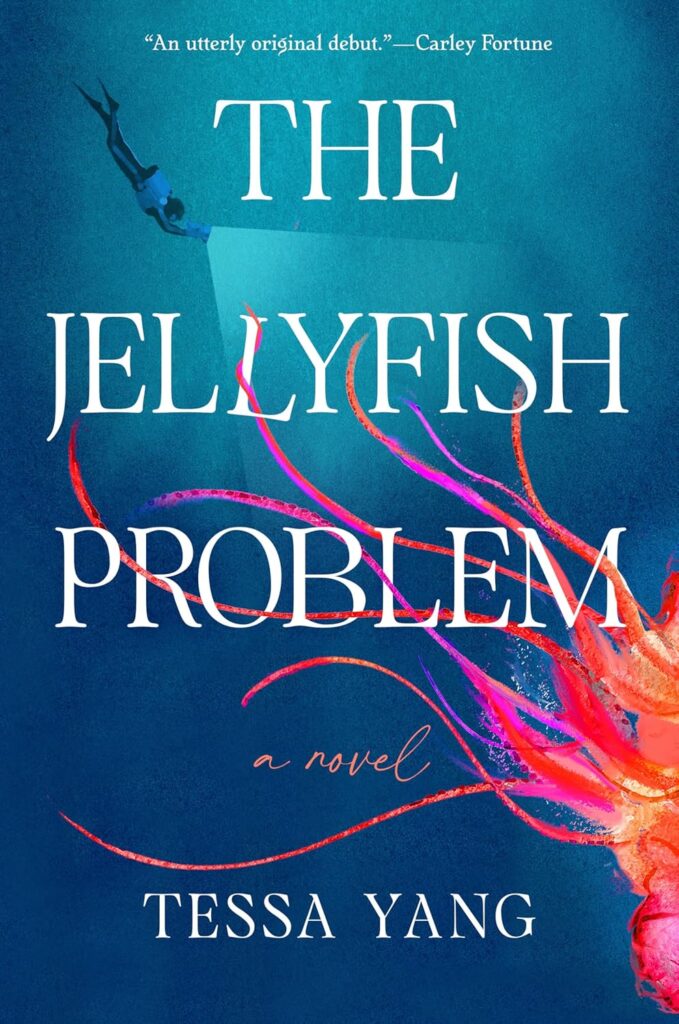
Hello, and thanks for having me! I’m an author based in upstate New York. Most of my work probably doesn’t fit squarely into any genre, though I love to read and borrow conventions from sci-fi, fantasy, and horror. I’ve published one story collection, The Runaway Restaurant, and my debut novel The Jellyfish Problem is forthcoming on June 2. I play Ultimate Frisbee, root for the St. Louis Cardinals, and have two lovely cats, Ripley and Honey, who hate each other.
What can you tell us about your book, The Jellyfish Problem? What was the inspiration for this story?
The Jellyfish Problem is the story of marine biologist Jo Ness and a giant jellyfish named Clementine whose unusual abilities she’s trying to understand. The original inspiration for this novel was Jaws, though the story evolved away from horror and became more focused on healing, community, and friendship. Jo has recently loss her best friend, and she’s sort of self-isolating as a way to cope. Clementine is an invitation for her to rejoin the world.
As a writer, what drew you to the art of storytelling?
I was drawn to storytelling from a very young age, young enough that I think some of the appeal must be innate—just the way I was wired. But this natural inclination got a boost when I hit the age where imaginative play became less socially acceptable. What do you mean I can’t run around with a stick pretending to be a pirate?! I remember feeling such a sense of loss that I’d aged out of that. Writing is a type of play that ages with you.
How would you describe your creative process?
A lot of trial and error. For me, storytelling decisions aren’t separate from the act of writing sentences. When I reach a point in the plot where “A” could happen, or “B” could happen, I write both. And then the answer is obvious: “Oh, it’s ‘B.’” But I can’t get there without the writing. I really have no idea what works until I try it.
What are some of your favorite elements of writing? What do you consider some of the most frustrating and/or challenging?
I love dialogue. It’s one of my favorite things to read and to write. And I love humor, not necessarily “ha-ha” kind of humor (though a good joke is always appreciated) but the observational kind that points out the quiet absurdities of being human. By far the hardest part of revising The Jellyfish Problem was figuring out the novel’s structure. I’m confident in scene, but organizing those scenes into a dramatically satisfying arc made my brain hurt.
As an author, who or what would you say are some of your greatest creative influences and/or sources of inspiration in general?
Lorrie Moore is the writer I credit with teaching me about the importance of humor. Later, I started collecting more influences that play with genre, people like Carmen Maria Machado, Allegra Hyde, Kelly Link, and Kim Fu. And I’m continually re-inspired by Octavia Butler and Ursula K. Le Guin. Stylistically, they’re totally different, but they live in a similar spot in my mind because of how they both used fiction to explore ideas about power in bold, brainy ways.
What’s a question you haven’t been asked yet but that you wish you were asked (as well as the answer to that question)?
I wish more people would ask about the work I don’t publish, which is easily 90% of what I write—the drawered novels, the abandoned short stories, the terrible poems about sharks. I wrote three drafts of a different novel before I jumped ship and started The Jellyfish Problem instead. It’s normal and necessary to write stuff that never gets read, but because this work is
also unseen, I think it leads to a broad misunderstanding about writers’ productivity and a false pressure around needing to produce only publishable work.
What advice might you have to give for any aspiring writers out there?
Some version of what I said in the last question: Embrace writing as play and as practice, not just as a route toward getting published. Also, read work that challenges you, however you define that. And befriend other writers! Everyone needs colleagues, peers, people who get the struggle.
Are there any other projects you are working on and at liberty to speak about?
My next novel is in the works, but in an early enough stage I won’t talk about plot details just yet! I have another story collection simmering on the back burner, which I’m trying to round out with a near-future sci-fi novella. And I just saw a cool anthology call from Scylla Publishing for sapphic monster reimaginings. I’m aiming to submit something to that soon.
Finally, what books/authors would you recommend to the readers of Geeks OUT?
Ocean’s Godori by Elaine U. Cho for a found-family space action thriller.
Monstrilio by Gerardo Sámano Córdova for a heartfelt queer monster story.
Saltcrop by Yume Kitasei for a sisterly, seafaring adventure.
The Tusks of Extinction by Ray Nayler for a supersmart eco-thriller.
And Nicholas Russell’s forthcoming novel Observer for atmospheric desert horror.
Header Photo Credit Kristen Renee Photography
0 Comments