
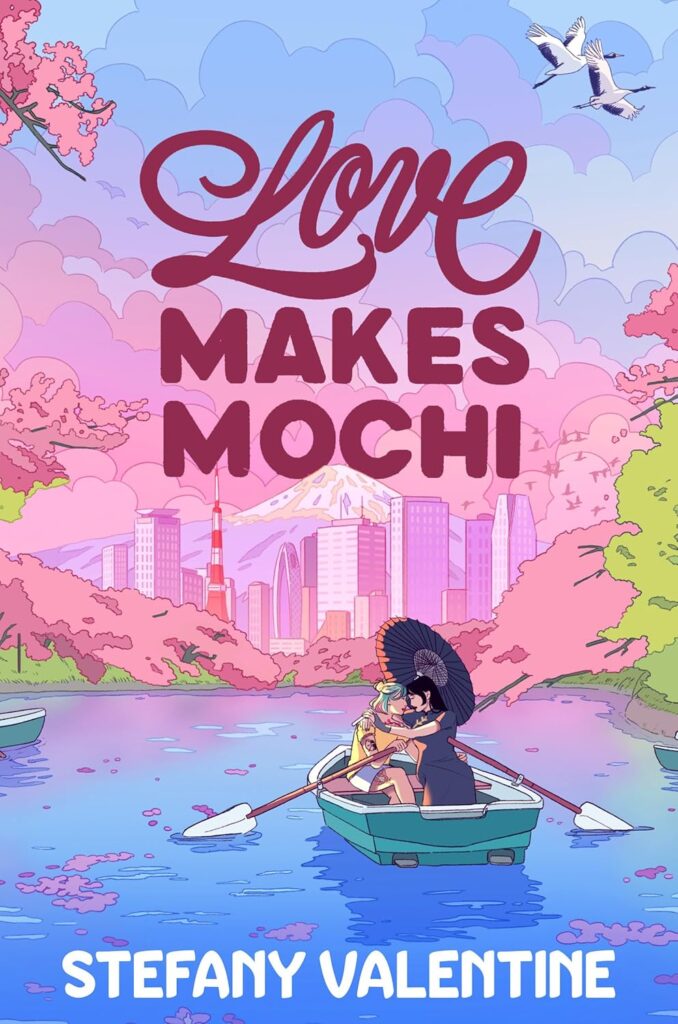
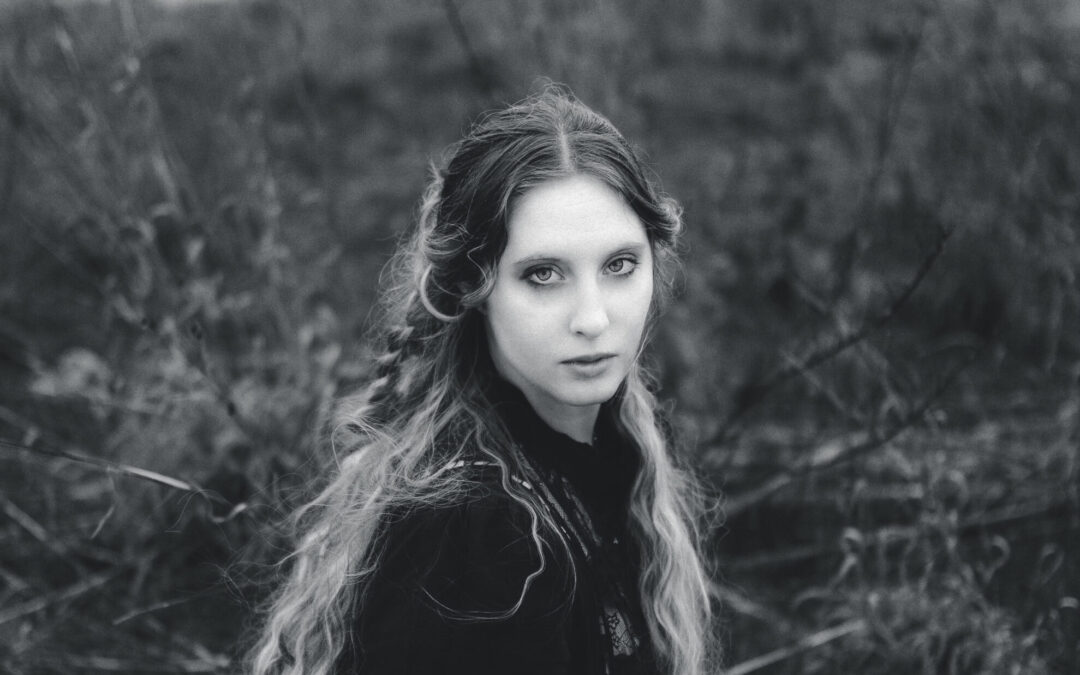
Stefany Valentine is an emerging young adult author. Her first publication is featured in the adoptee anthology, When We Became Ours, and her sophomore title, Love Makes Mochi, is expected to release with Joy Revolution in 2026. Follow her for updates on TikTok, Instagram, and X @BooksByStefany.
I had the opportunity to interview Stefany, which you can read below.
First of all, welcome to Geeks OUT! Could you tell us a little about yourself?
Hi! I’m Stefany! I’m a biracial, bisexual, Taiwanese adoptee. I’m mostly known as the author who found her birthmother while publishing a book about an adoptee searching for her birthmother. And now that book, FIRST LOVE LANGUAGE, is a 2026 Morris Award Finalist!
What can you tell us about your project, Love Makes Mochi? What was the inspiration for it?
LOVE MAKES MOCHI is an IP. I was hired by the team at Electric Postcard Entertainment to write the third installment of their LOVE IN TRANSLATION series. The inspiration for the series is SISTERHOOD OF THE TRAVELING PANTS but make it BIPOC and each member of the friend group gets to go on their own adventure!
What can you about the inspiration for your debut novel, First Love Language?
FIRST LOVE LANGUAGE came from my own lived experience as a Taiwanese adoptee who grew up Mormon. In my youth, I had never read a book about an adoptee written by an adoptee. It makes such a difference because when non-adoptees write about us, we get stereotyped into grateful vessels that adoptive parents get to pour themselves into—a stereotype that was literally created by Georgia Tann, a human trafficker so that she could make millions off selling children.
But the reality is that adoptees are complex. We exist in the middle of polarizing emotions. Every adoptee’s story starts with loss, detachment, and rejection. We carry that weight around when we are with family, friends, and even as we enter the dating world. And then we get told to be grateful, to be lucky someone “loves” us. All the while the people telling us haven’t done an ounce of research into adoption history—let alone global adoption history.
I wanted to write something that shows the honest lived experience of an adoptee. We can experience joy and first love. We can be triggered by rejection and paralyzed by insecurity. And all of this can be exacerbated when intersected with a religion that emphasizes genealogy the way that Mormonism does. I wrote this story because I wanted to allow myself, and others, to authentically exist at an intersection that hasn’t been explored before.
As a creative, what drew you to the art of storytelling, especially young adult fiction and romance?
After reuniting with my biological mom, she told me that I’ve always had an affinity for listening to stories. She told me that when I was little, she used to calm me down by reading me a story. To this day, I LOVE audiobooks. And, like mother, like daughter, my mom loves audiobooks too!
I’m currently living with her in an apartment in Taiwan. In her spare time, she’ll get on TikTok and listen to those Taiwanese podcasts that tell love/horror stories. She’ll just lay on the couch and listen from her phone. It’s been very interesting to see. I hope that one day I can understand Mandarin as fluently as she can.
But as an author, I will always circle back to YA because those are the crucial years of one’s development. Especially as an adoptee, I internalized so much of my trauma and never had the space to process the reality of it. I’m proud to be one of the few authors who is not only writing from a lived perspective, but I’m helping my fellow adoptee/foster writers emerge into this space as well.
What are some of your favorite elements of writing? What do you consider some of the most frustrating and/or difficult?
My favorite part of writing is finding ways to get the reader to feel what my character is feeling. I love that when reading a book, I’m literally dropped into someone else’s head. As readers, it helps us develop empathy. As writers, we get to create words with the rawness of our own humanity. It’s the very art of reading and writing that will always pull me back to it.
But the most difficult thing about this craft is to express emotions in a way that doesn’t feel redundant. That’s what a great editor is for!
As a creative, who or what would you say are some of your greatest creative influences and/or sources of inspiration in general?
In the adoptee community, we have a holiday called Adoptee Remembrance Day (October 30). It’s a holiday where we remember the adoptees who came before us (specifically, the ones who lost their lives due to unaddressed adoption trauma). This includes the orphans who were sent away on orphan trains, the infants who were relinquished in China due to the One Child Policy, the Indigenous children placed into white homes during the Sixties Scoop, modern day private adoption etc. Of these millions of people throughout history, hardly any of them got to tell their specific stories. That is why I write about adoptee experiences. I think of the stories that came before mine and the ones who will come after.
Fortunately, I’m not alone in this. I am a part of a generation of adoptee authors including Shannon Gibney, Nicole Chung, Mariama J Lockington, Eric Smith, Mark Oshiro, and emerging authors whom I DM regularly as a way to keep the ladder down for others to climb. Together, we are giving a microphone to the silenced and rewriting the narrative that was stolen from us.
Aside from your work, what are some things you would want readers to know about you?
BIRDS!! I love birds!! I’m an avid birdwatcher in my hometown of Corpus Christi, Texas. Not to brag, but there are less than 1,000 whooping cranes left in the world and in 2025, I saw four of them. That has been one of the glowing highlights of my life.
What’s a question you haven’t been asked yet but that you wish you were asked (as well as the answer to that question)?
As an adoptee, I get asked a lot of questions. But what I wish instead is that people would get comfortable with being uncomfortable. It takes time to unlearn adoption propaganda. It’s not comfortable for an adoptive parent to realize that despite their best efforts, their love wasn’t enough. Love cannot replace loss. Love cannot teach culture to a transracial adoptee. Love cannot retrieve original birth records and medical history—documents that are legally locked away upon adoption. You can love someone and still participate in a for-profit system that sells children and falsifies their legal documents. Two truths can exist at the same time. Life as an adoptee is literally learning how to juggle polarizing emotions from early developmental years. The least people can do is try to feel what we feel. That is why I work so hard to allow people a glimpse into an adoptee’s head.
What advice might you have to give for aspiring storytellers out there?
Don’t think about the trope you’re trying to sell. Focus on the human emotion you’re trying to get your readers to feel!
Are there any other projects you are working on and at liberty to speak about?
Unfortunately, I cannot share specific details at this time, but I can reveal that I have another YA sapphic romance that I should be announcing soon. I’m also working on breaking out in the NA space with a bi Mormon rom-dram-com. More on that soon—hopefully!
Finally, what books/authors would you recommend to the readers of GeeksOUT?
Sonido Reyes
Jonny Garza Villa
Marcia Mickelson
Ravynn K Stringfield
Aashna Avachat
0 Comments